
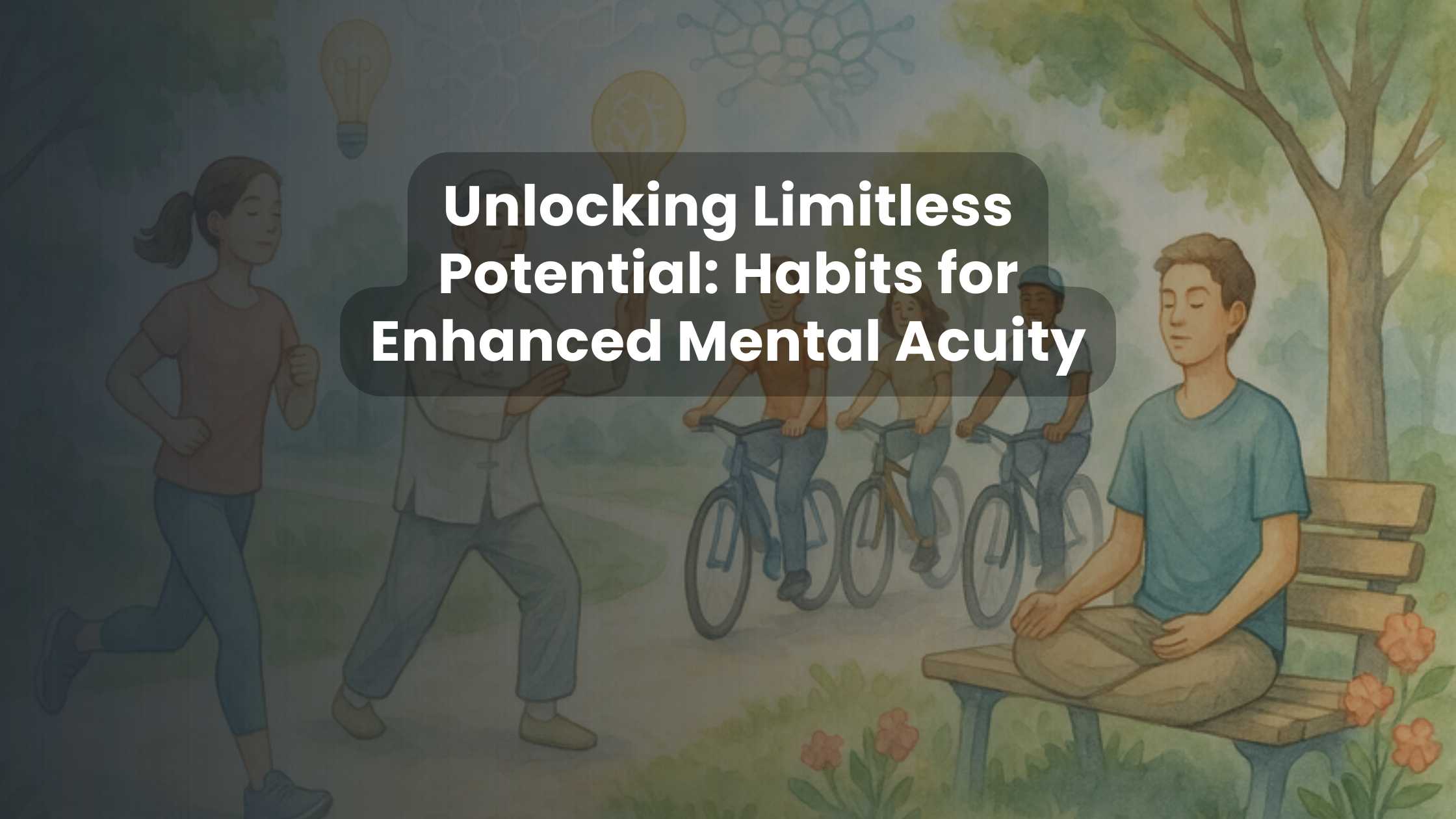
Unlocking Limitless Potential: Habits for Enhanced Mental Acuity
In a world overflowing with information and constant distractions, sharpening your mind can feel like an elusive goal. Yet, cultivating enhanced mental acuity is not just about working harder—it’s about adopting intentional habits that nurture your cognitive abilities and unlock your brain’s full potential. Imagine expanding your thinking by exploring a wide range of subjects, not only gaining knowledge but also weaving connections that spark creativity. Picture yourself engaging in deep, meaningful conversations that transform scattered ideas into clear insights, refining your understanding through dialogue. Consider the power of just a few minutes of daily meditation to bring clarity and focus, organizing your thoughts amidst the chaos. By consciously limiting screen time and social media, you reclaim precious mental energy, allowing your mind to concentrate on what truly matters. Finally, acknowledging the intimate link between body and mind, taking care of your physical health through sleep, nutrition, and exercise provides the essential fuel for peak cognitive performance. Embracing these practices opens the door to a level of mental clarity and agility where your potential knows no bounds.
Expand Your Mind by Learning Broadly and Thoroughly
Expanding your mind by learning broadly and thoroughly opens doors to new ways of thinking and problem-solving. When you explore a wide range of subjects, from history to science, art to technology, you create a rich network of knowledge that allows you to see connections others might miss. For instance, understanding basic principles of psychology can improve how you communicate in business or personal relationships. This broad approach not only enriches your perspective but also deepens your understanding, enabling you to approach challenges creatively and confidently. The key is to dive deeply into each topic, ensuring you grasp core concepts rather than skimming the surface.
Engaging in meaningful conversations is a powerful way to transform passive knowledge into active insight. When you discuss ideas with others, you test your understanding, refine your thoughts, and gain new viewpoints. For example, joining a book club or a debate group exposes you to diverse opinions, encouraging you to think critically and articulate your ideas clearly. These dialogues often spark curiosity, pushing you to learn more and think differently. By turning learning into a social activity, you make it more dynamic and memorable, which strengthens your mental acuity over time.
Mastering the art of meditation can significantly enhance your ability to learn broadly and thoroughly. Spending just five minutes a day in focused meditation helps clear mental clutter and improve concentration. This practice organizes your thoughts and allows you to digest complex information more efficiently. Studies have shown that meditation can increase cognitive capacity, making your brain more agile and receptive. Incorporating meditation into your daily routine creates a mental environment conducive to absorbing and connecting new knowledge, thereby expanding your intellectual horizons.
Limiting social media and screen time plays a crucial role in maintaining the focus needed for deep learning. Excessive exposure to digital distractions drains mental energy and fragments attention, making it harder to engage fully with challenging material. Setting clear boundaries, such as designating specific times for checking social media or using apps that track screen usage, can help reclaim your focus. This freed-up mental space allows you to dedicate more time and energy to enriching activities like reading, studying, or engaging in thoughtful conversations, ultimately supporting a broader and more thorough learning process.
Taking care of your physical health directly supports your brain’s performance and capacity to learn extensively. Adequate sleep restores memory and concentration, balanced nutrition fuels cognitive functions, and regular exercise boosts blood flow to the brain, enhancing mental sharpness. For instance, research shows that aerobic exercise can increase the size of the hippocampus, a brain area critical for learning and memory. By prioritizing your physical well-being, you lay a strong foundation for sustained mental clarity and agility, empowering you to expand your mind with greater ease and effectiveness.
Boost Cognitive Skills Through Meaningful Conversations
Meaningful conversations play a crucial role in boosting cognitive skills by encouraging active engagement with ideas. When individuals discuss complex topics or share diverse perspectives, they stimulate critical thinking and improve their ability to analyze information. For example, debating a current event or exploring different viewpoints about a scientific discovery can help participants deepen their understanding and connect concepts in innovative ways. This dynamic exchange moves knowledge from passive reception to active processing, sharpening reasoning and problem-solving abilities.
Engaging in meaningful conversations also enhances memory retention and verbal fluency. By articulating thoughts clearly and responding to others’ viewpoints, people practice organizing their ideas and recalling relevant information quickly. Research shows that conversational learning can improve cognitive flexibility, allowing individuals to adapt their thinking when faced with new challenges. In practical terms, this means that regularly discussing diverse topics with friends, colleagues, or mentors not only expands one’s understanding broadly and thoroughly but also develops mental agility needed for effective decision-making.
To maximize the cognitive benefits of conversations, it’s important to approach discussions with curiosity and openness. Asking thoughtful questions and actively listening to responses promotes deeper insight and helps uncover nuances in complex subjects. Pairing this habit with deliberate learning strategies, such as reading broadly across disciplines, enriches the content of conversations and further expands mental frameworks. For instance, exploring history, science, and art before engaging in dialogue equips you with varied knowledge to draw upon, making interactions more stimulating and intellectually rewarding.
Beyond intellectual engagement, meaningful conversations also support mental clarity and focus, which are essential for cognitive growth. Incorporating daily meditation can complement these discussions by calming the mind and improving attention span. Even five minutes of focused breathing before or after a conversation can help organize thoughts and enhance comprehension. Combining meditation with reduced screen time ensures that mental energy is preserved for rich, productive exchanges rather than being drained by distractions, boosting overall cognitive performance in a sustainable way.
Practical steps to boost cognitive skills through meaningful conversations include setting aside regular time for in-depth discussions, diversifying your conversational topics, and seeking out different viewpoints. Additionally, pairing these conversations with habits that support brain health—such as getting enough sleep, eating nutritious meals, and exercising—creates a strong foundation for mental acuity. By integrating these approaches, you can turn everyday interactions into powerful tools for expanding your cognitive capacity and maintaining sharp, agile thinking.
Master Meditation Techniques for Improved Mental Clarity
Mastering meditation techniques is a powerful way to sharpen mental clarity and enhance overall cognitive function. Meditation trains the mind to focus on the present moment, reducing distractions and calming mental chatter. Even dedicating five minutes a day to simple breathing exercises or guided mindfulness can help organize thoughts and improve concentration. For example, professionals who incorporate brief meditation breaks during their workday report increased productivity and clearer decision-making. This practice slowly rewires the brain to process information more efficiently and reduces stress, which often clouds judgment.
Exploring different meditation styles can broaden your skill set and deepen mental clarity. Techniques such as focused attention meditation, where you concentrate on a single object or breath, help cultivate intense focus. Open monitoring meditation encourages awareness of thoughts and feelings without attachment, fostering mental flexibility. Loving-kindness meditation promotes emotional balance, which supports cognitive resilience. Experimenting with these approaches allows you to find what resonates best and builds a personalized routine that maximizes clarity and calmness in daily life.
Limiting social media and screen time complements meditation by reducing mental clutter. Constant exposure to digital stimuli fragments attention and drains mental energy, making it harder to achieve focus. Setting clear boundaries, such as designated tech-free periods or turning off notifications, helps preserve your mental resources. When combined with meditation, these habits create a peaceful mental environment conducive to thoughtful reflection and deeper insight. For instance, students who reduce screen time report better concentration during study sessions and improved retention of information.
Physical health plays a crucial role in supporting meditation’s benefits for mental clarity. Adequate sleep replenishes cognitive functions, balanced nutrition fuels the brain, and regular exercise increases blood flow to support neural activity. Integrating these habits ensures the brain operates at peak capacity, making meditation more effective. Athletes and executives alike use this combination to maintain sharpness under pressure. Prioritizing physical wellness alongside meditation creates a holistic approach that sustains mental clarity over the long term.
Engaging in meaningful conversations is another key to mastering mental clarity through meditation. Dialogue encourages you to articulate ideas clearly, receive feedback, and refine your understanding. Sharing insights gained from meditation with others can deepen your awareness and uncover new perspectives. For example, participating in discussion groups or mindful workshops enhances both social connection and cognitive agility. This active exchange complements the inward focus of meditation, turning quiet reflection into dynamic learning and growth.
To take action, start by setting a daily meditation goal of five minutes. Choose a quiet space, focus on your breath, and gently bring attention back whenever the mind wanders. Next, create simple rules to limit screen use, such as no phones during meals or one hour before bedtime. Incorporate regular physical activity, even a short walk, to boost brain health. Finally, seek out conversations about meditation or mental clarity topics to deepen your practice. By combining these steps, you build a strong foundation for improved mental clarity that can enhance every aspect of your life.
Limit Social Media and Screen Time to Enhance Focus
Excessive social media use and screen time can significantly drain your ability to concentrate. The constant influx of notifications, updates, and alerts interrupts your train of thought, making it difficult to sustain attention on important tasks. Research shows that frequent interruptions from digital devices reduce productivity and increase mental fatigue. For example, a study published in the Journal of Experimental Psychology found that multitasking with digital distractions can lower IQ scores as much as missing a night’s sleep. By consciously limiting social media and screen engagement, you preserve your mental energy and create an environment more conducive to deep focus and meaningful work.
Setting clear boundaries around technology use can help you regain control over your attention span. Simple strategies include scheduling specific times for social media browsing instead of checking it throughout the day. Using apps that track and restrict screen time can also provide valuable feedback on your habits and encourage mindful usage. For instance, enabling “Do Not Disturb” modes during work hours can minimize interruptions, allowing you to engage more fully with tasks that require concentration. These practical steps not only reduce digital overload but also free up time for activities that nurture your cognitive skills, such as learning broadly and thoroughly or engaging in meaningful conversations.
Reducing screen time also supports better mental clarity and emotional balance, which are critical for sustained focus. When you step away from digital distractions, your brain gets a chance to rest and reset. This downtime enhances cognitive capacity and creativity, making it easier to connect ideas and solve problems. Incorporating short breaks away from screens, such as a five-minute meditation session, can further sharpen your attention and organize your thoughts. By prioritizing these habits, you build a foundation for enhanced mental acuity, enabling you to approach tasks with renewed energy and sharper insight.
To implement these changes effectively, start by identifying your most distracting social media activities and set realistic limits. For example, limit social media use to 30 minutes in the morning and 30 minutes in the evening, rather than sporadic checking all day. Turn off non-essential notifications and designate screen-free zones, such as the dining area or bedroom, to reduce temptation. Pair these efforts with physical health practices like regular exercise and quality sleep, which amplify your brain’s ability to focus. By combining these targeted actions, you create a balanced routine that maximizes productivity while minimizing digital overload.
Optimize Brain Function with Quality Sleep and Nutrition
To optimize brain function, it is essential to prioritize quality sleep and nutrition. Sleep is not merely a period of rest; it is a critical time for the brain to process information, consolidate memories, and clear out toxins. Studies have shown that individuals who average seven to nine hours of quality sleep per night demonstrate improved cognitive abilities, including better decision-making and enhanced problem-solving skills. When we sleep, our brains engage in a process called synaptic pruning, which strengthens the connections that matter while discarding those that don’t. This biological reset is vital for maintaining mental agility and clarity throughout the day.
Nutrition plays an equally pivotal role in brain health. The brain requires a constant supply of nutrients to function optimally. For instance, omega-3 fatty acids, found in fish like salmon, are known to support cognitive functions and may even help protect against age-related decline. Incorporating a balanced diet rich in fruits, vegetables, whole grains, and lean proteins provides essential vitamins and minerals that support neurotransmitter function. For example, antioxidants found in berries can reduce oxidative stress in the brain, promoting better memory and learning capabilities. By focusing on nutrient-dense foods, individuals can fuel their brains effectively, enhancing overall cognitive performance.
Engaging in meaningful conversations is another major factor in optimizing brain function. Discussions stimulate mental processes, allowing individuals to refine their thoughts and gain new insights. When you converse about diverse topics, you are not only sharing knowledge but also challenging your brain to think critically and creatively. This exchange of ideas can lead to innovative solutions and deeper understanding of complex issues. Making a habit of discussing books, current events, or personal experiences with friends or colleagues can significantly enrich your cognitive landscape.
In addition to nutrition and sleep, mastering the art of meditation can significantly enhance mental clarity and focus. Just five minutes of daily meditation can help organize thoughts, reduce stress, and improve overall cognitive capacity. This practice encourages mindfulness, enabling individuals to center their thoughts and minimize distractions. Research has indicated that regular meditation can increase the thickness of the prefrontal cortex, an area of the brain associated with decision-making and self-control. By integrating this simple yet effective practice into your daily routine, you can cultivate a more focused and agile mind.
Limiting social media and screen time is crucial for preserving mental energy. In our digital age, constant notifications and scrolling can lead to cognitive overload and diminished attention spans. Setting boundaries, such as designated screen-free times, allows for mental recuperation and encourages engagement in more enriching, productive activities. This shift not only helps reclaim focus but also fosters deeper connections with the world around you, from nature to interpersonal relationships.
Lastly, taking care of physical health is foundational for optimal brain function. Regular exercise has been shown to boost mental acuity by increasing blood flow to the brain and releasing endorphins that enhance mood. Additionally, adequate sleep and balanced nutrition work synergistically with physical activity to create an ideal environment for cognitive growth. By integrating these habits into your lifestyle, you can unlock the limitless potential of your mind, where clarity and agility of thought become a daily reality.
Incorporate Regular Exercise to Strengthen Mental Acuity
Regular exercise is a powerful tool to strengthen mental acuity, offering benefits that go far beyond physical health. Physical activity increases blood flow to the brain, delivering essential oxygen and nutrients that support cognitive functions like memory, concentration, and problem-solving. Studies show that individuals who engage in consistent aerobic exercise, such as brisk walking or cycling, tend to perform better on tasks requiring mental sharpness and quick thinking. For example, research published in the Journal of Clinical Psychiatry found that exercise can reduce symptoms of mental fatigue and improve executive functions, which are crucial for planning and decision-making.
Incorporating exercise into your daily routine also promotes the release of neurotransmitters like dopamine and serotonin, chemicals that enhance mood and reduce stress. Lower stress levels directly impact mental clarity, enabling you to focus more effectively and absorb information more efficiently. This connection explains why people who exercise regularly often report feeling more alert and mentally agile throughout the day. Activities like yoga or tai chi combine physical movement with mindfulness, further sharpening attention by calming the mind and improving overall brain function.
To maximize the cognitive benefits of exercise, consistency and variety are key. Mixing cardiovascular workouts with strength training and flexibility exercises challenges the brain in different ways, encouraging neural growth and adaptability. For example, alternating running with resistance training three times a week can stimulate various brain regions, strengthening both memory and coordination. Establishing a routine that fits your lifestyle—whether it’s a morning jog, lunchtime stretching, or evening dance class—makes it easier to maintain this habit and reap long-term mental benefits.
Practical steps for incorporating regular exercise to strengthen mental acuity include setting achievable goals, tracking progress, and combining physical activity with other brain-boosting habits. Start with 20 to 30 minutes of moderate exercise most days, and gradually increase intensity or duration. Pair your workouts with learning broadly and thoroughly by listening to educational podcasts or engaging in meaningful conversations afterward to reinforce what you’ve absorbed. Additionally, mastering the art of meditation post-exercise can further enhance focus by organizing your thoughts and calming the mind, making the mental benefits of physical activity even more profound.

Cultivate Creative Thinking by Connecting Diverse Knowledge
Cultivating creative thinking starts with learning broadly and thoroughly. When you explore various subjects—from science and art to history and technology—you build a rich mental library of ideas and concepts. This diverse knowledge base allows you to draw unique connections that spark innovation. For example, an engineer inspired by biology might develop new materials mimicking natural structures. By expanding your horizons, you deepen your understanding and create fertile ground for creative insights that would otherwise remain hidden.
Engaging in meaningful conversations further sharpens creative thinking by transforming passive knowledge into active insight. When you discuss ideas with others, you refine your thoughts and gain fresh perspectives. These dialogues push you to challenge assumptions and synthesize information in new ways. Consider how brainstorming sessions in teams often lead to breakthrough solutions that individuals alone might not discover. By seeking out diverse viewpoints and sharing your ideas, you create a dynamic environment where creativity thrives.
Mastering the art of meditation is another powerful tool to cultivate creative thinking. Spending just five minutes a day in focused meditation can enhance your mental clarity and improve cognitive function. This practice helps organize scattered thoughts, making it easier to connect different pieces of knowledge effectively. Studies show that regular meditation increases gray matter density in brain regions related to learning and memory. By calming your mind, you create space for innovative ideas to emerge naturally.
Limiting social media and screen time is essential to preserve mental energy for creative pursuits. Constant notifications and endless scrolling drain focus, leaving little room for deep thinking. Setting boundaries on technology use helps reclaim attention and promotes sustained concentration. For example, designating specific periods for checking emails or social platforms can free up time for reflective activities like reading or brainstorming. Reducing digital distractions creates a mental environment conducive to connecting diverse knowledge and generating original ideas.
Taking care of your physical health directly supports creative thinking by fueling your brain for peak performance. Adequate sleep restores cognitive functions, balanced nutrition provides essential brain nutrients, and regular exercise improves blood flow to the brain. These habits boost mental acuity, making it easier to process and integrate information from different fields. Research indicates that physically active individuals often outperform peers in tasks requiring creativity and problem-solving. Prioritizing your health lays a strong foundation for sustained creative thinking through diverse knowledge connections.
Develop Consistent Habits for Sustained Cognitive Performance
Developing consistent habits is essential for achieving sustained cognitive performance over time. When you cultivate routines that nurture your brain daily, you create a foundation for mental clarity and agility. For instance, learning broadly and thoroughly by exploring diverse subjects enriches your perspective and deepens your understanding. This approach not only expands your knowledge base but also fosters creative connections between ideas, making problem-solving and decision-making more effective. By dedicating time regularly to varied learning experiences, you keep your mind engaged and adaptable, which is key to long-term cognitive health.
Engaging in meaningful conversations is another powerful habit that supports sustained cognitive performance. When you actively discuss ideas with others, you move from passive absorption to active insight. This process refines your thoughts, challenges assumptions, and enhances your ability to articulate complex concepts clearly. For example, joining study groups or professional forums encourages you to exchange viewpoints, solidify your understanding, and spark new ideas. These dialogues serve as mental workouts, strengthening neural pathways and improving memory retention.
Incorporating meditation into your daily routine can significantly boost focus and mental clarity. Just five minutes of meditation each day helps organize your thoughts, reduce stress, and increase your brain’s capacity to handle information. Meditation trains your attention, allowing you to sustain mental effort longer without fatigue. Many professionals report improved concentration and creativity after adopting this simple habit. Starting with brief, guided sessions and gradually extending the duration can make meditation a manageable and impactful practice for anyone looking to enhance cognitive stamina.
Limiting social media and screen time is critical for preserving mental energy and maintaining cognitive function. Excessive exposure to digital distractions fragments attention and drains focus, making it harder to engage deeply with tasks that require critical thinking. Setting clear boundaries, such as designated no-screen hours or using apps to monitor usage, helps reclaim your mental bandwidth. This intentional reduction in screen time frees up space for more enriching activities like reading, problem-solving, or interpersonal interaction—habits that collectively strengthen cognitive resilience.
Taking care of your physical health directly influences your brain’s performance. Adequate sleep, balanced nutrition, and regular exercise provide the essential fuel your mind needs to operate at its best. For example, studies show that consistent aerobic exercise improves memory and executive function by increasing blood flow to the brain. Similarly, a diet rich in antioxidants and omega-3 fatty acids supports neural health and reduces cognitive decline. Prioritizing rest, wholesome food, and movement creates a holistic routine that sustains mental acuity and sharpness day after day.
To implement these habits effectively, start by setting small, achievable goals. Schedule daily learning sessions on topics that intrigue you and seek out conversation partners with shared interests. Incorporate a short meditation break into your morning routine and use tools to limit your screen exposure in the evening. Finally, track your sleep patterns, plan nutritious meals, and find enjoyable physical activities to maintain consistency. By making these habits a natural part of your lifestyle, you equip yourself with the mental tools to perform at your highest level over the long run.
Conclusion
In conclusion, unlocking your limitless mental potential is within reach when you cultivate habits that nurture and sharpen your mind. By learning broadly and thoroughly, you open doors to new perspectives and creative connections. Engaging in meaningful conversations transforms passive knowledge into active insight, deepening your understanding. Incorporating meditation into your daily routine can enhance focus and clarity, while consciously limiting social media and screen time helps preserve your mental energy for what truly matters. Finally, prioritizing your physical health through sleep, nutrition, and exercise provides the essential foundation for optimal cognitive performance. Embracing these practices consistently empowers you to achieve greater mental agility and clarity. Take a moment to reflect on which habit you can integrate into your life today, and start your journey toward enhanced mental acuity and limitless potential. For more strategies to sharpen your mind and elevate your thinking, keep exploring and stay curious.
FAQ
Frequently Asked Questions about Unlocking Limitless Potential: Habits for Enhanced Mental Acuity
What does learning broadly and thoroughly mean, and why is it important?
Learning broadly and thoroughly involves exploring a wide range of subjects deeply and with curiosity. This approach enriches your perspective by exposing you to diverse ideas and knowledge, which helps you make creative connections and think more innovatively.
How can engaging in meaningful conversations improve mental acuity?
Meaningful conversations allow you to actively process and refine your thoughts. By discussing ideas with others, you challenge your understanding, gain new insights, and strengthen your cognitive abilities through shared dialogue.
Why is meditation recommended for enhancing mental clarity?
Meditation, even for just five minutes a day, helps organize your thoughts and improve focus. This practice calms the mind, reduces mental clutter, and increases cognitive capacity, making it easier to think clearly and respond effectively to challenges.
How does limiting social media and screen time contribute to better mental performance?
Excessive screen time and social media use can drain your mental energy and distract you from more enriching activities. Setting boundaries helps you reclaim focus, reduce stress, and direct your attention to tasks that enhance your mental acuity.
What role does physical health play in cognitive function?
Your brain depends on physical well-being to perform at its best. Adequate sleep, balanced nutrition, and regular exercise provide the necessary fuel and recovery your brain needs, boosting memory, concentration, and overall mental sharpness.
Can these habits really help me reach limitless mental potential?
Yes. By consistently integrating these habits into your daily routine, you can enhance your mental clarity, agility, and creativity. Over time, this leads to a state where your cognitive abilities feel expansive and more effective in handling complex tasks and ideas.


